Whatever Happened to Disneyland Ticket Prices?
Table of Contents

The Golden Era: When Disneyland Ticket Prices Were Pocket Change
On July 17, 1955, Walt Disney opened Disneyland with a vision: a family-friendly amusement park where everyone could afford a day of entertainment. The inaugural Disneyland ticket prices reflected this democratic dream. The initial admission cost was just $1 for adults and 50 cents for children. That’s roughly $12 and $6 in today’s dollars, respectively—a fraction of current costs.
Through the 1960s and 1970s, Disneyland ticket prices remained shockingly reasonable. A family of four could experience the park for under $20. The park operated on what analysts now call the “Disneyland model”—make admission affordable, then monetize through food, merchandise, and special experiences. This strategy created unprecedented loyalty and word-of-mouth marketing.
By 1980, when inflation had certainly taken its toll, Disneyland ticket prices hovered around $25 for adults. Still accessible. Still surprising that you could get a full day of entertainment for less than a decent dinner. This era created generations of lifelong Disney devotees who didn’t need to save for months to experience the magic.
The Escalation Begins: Disneyland Ticket Prices Enter the Modern Age
The 1980s and 1990s marked a turning point in Disneyland ticket prices strategy. Disney, now operating two U.S. parks, began understanding the true scarcity value of their product. Disneyland ticket prices started climbing with real purpose. By 1995, daily admission crested $50. By 2000, it approached $100 for peak days.
The catalyst? Disney’s executive leadership, particularly CEO Bob Chapek’s predecessors, realized something fundamental: demand for Disneyland was essentially infinite. People would save for years to visit. International visitors viewed it as a bucket-list destination. Corporations brought employees. The supply of park capacity couldn’t expand infinitely, but pricing could.
Through the 2000s and 2010s, Disneyland ticket prices followed a consistent upward trajectory that outpaced inflation by 300%. A 2015 Disneyland day pass cost roughly $150. Parents who’d grown up with $25 tickets found themselves explaining to their children why a family of four now needed to budget $600+ for a single day.

The Dynamic Pricing Revolution: Disneyland Ticket Prices Go Algorithmic
The 2020s brought the most controversial change to Disneyland ticket prices: dynamic pricing. Disney moved away from fixed daily rates to an algorithm-based system where Disneyland ticket prices fluctuate based on demand, seasonality, and predicted crowds. On a holiday weekend in summer, a single-day park hopper pass can exceed $300. On a random Tuesday in September, it might be $150.
This strategy, borrowed directly from airlines and hotels, maximizes revenue but fundamentally altered how families plan vacations. Gone was the predictability that let families save toward a Disney trip. Now, you couldn’t budget accurately. The cheapest Disneyland ticket prices for a given month could vary by $100 depending on Mickey’s algorithm.
Disney also aggressively pushed annual passes and multi-day packages, which shifted the Disneyland ticket prices conversation. Rather than a single $250 day pass, Disney offered $400 annual passes (with blackout dates) or $800 three-day tickets. The psychology shifted from “Can we afford one magical day?” to “Should we commit to annual membership?”
According to Reuters reporting on Disney’s financial strategies, this shift toward dynamic Disneyland ticket prices has generated record quarterly revenue from parks and experiences, though attendance metrics have become murkier as Disney bundles experiences differently.
Where Disneyland Ticket Prices Stand Today
As of 2026, the cheapest Disneyland ticket prices start around $110 for an off-season, non-weekend day. Premium days reach $250+. Multi-day tickets run $200-$280 per day. Annual passes begin at $399 with significant blackout date restrictions, and top out at nearly $1,600 for unlimited access.
A family of four spending a single day at Disneyland now requires a budget exceeding $1,000 when you factor in parking ($20), meals (average $18 per item), and merchandise. This represents a $1,000+ experience that was $200 in inflation-adjusted terms just 20 years ago.
The impact has been measurable. Visit Entertainment news on Scope Digest for broader trends showing middle-class families increasingly turning to competing parks or forgoing Disneyland visits entirely. Universal, Six Flags, and regional parks have benefited as Disneyland prices have climbed beyond traditional family vacation budgets.
Is There Any Way Back?
Realistically? No. Disney’s business model has fundamentally shifted. Shareholders expect margin optimization. Park capacity remains fixed while demand—particularly from international visitors and affluent tourists—remains robust. Disneyland ticket prices will likely continue climbing.
What’s changed isn’t just the price but the entire relationship between Disney and average families. The park that Walt built as a democratic, accessible destination has become increasingly exclusionary. The democratization of magic has been replaced by monetization of nostalgia.
The tragic irony: Disney’s success in optimizing Disneyland ticket prices may ultimately erode the very thing that made the parks special—a shared cultural experience accessible to everyone. When only wealthy families can afford the visit, the magic becomes something you remember rather than something you create.
For those nostalgic about affordable Disneyland ticket prices? That era ended quietly, one price hike at a time.
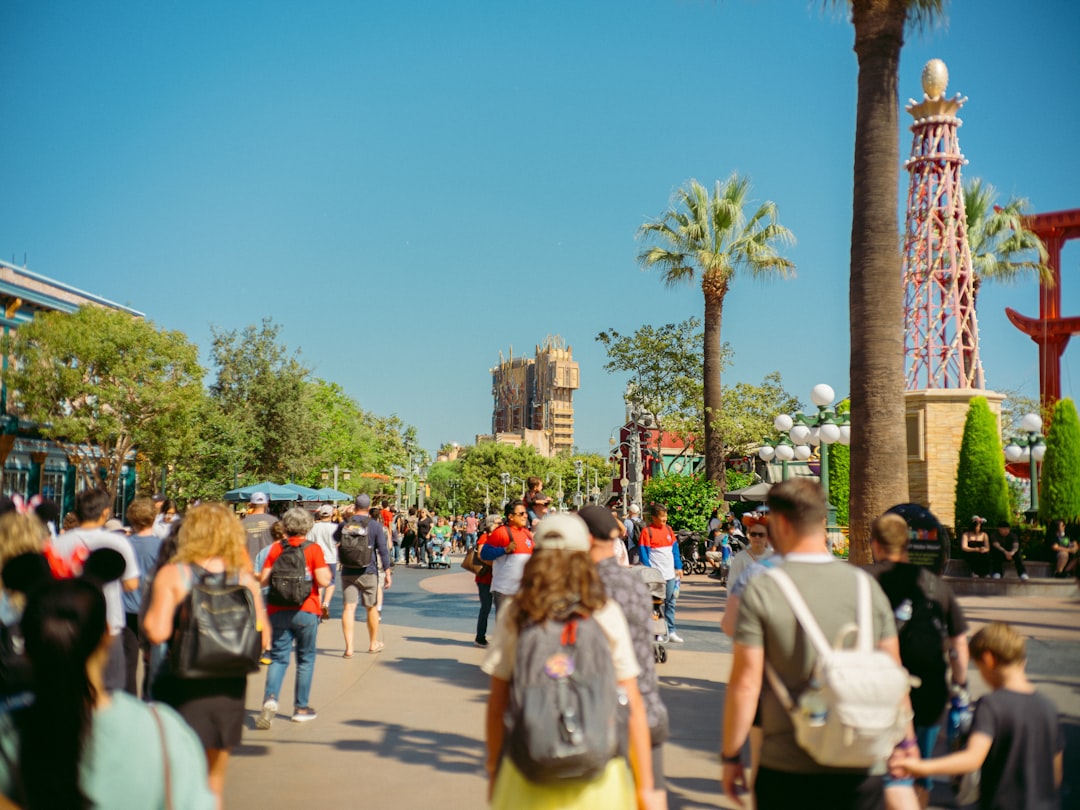
Photo by Jakob Owens on Unsplash