Table of Contents
- The Historical Foundation: Understanding America’s Voice
- Why Is Real America’s Voice Facing an Identity Crisis?
- Global Impact and Reach in the Digital Age
- The Authenticity Question: Does VOA Reflect True American Values?
- Challenges and Controversies Shaping the Future
- What Comes Next for America’s Global Messaging?
The Historical Foundation: Understanding America’s Voice
The Voice of America launched during World War II with a singular mission: to broadcast truthful information to audiences behind enemy lines. For decades, it represented Washington’s soft power tool, particularly during the Cold War when competing ideologies battled for hearts and minds across iron curtains and closed borders. Today, why is real America’s voice still necessary when we live in an interconnected world with instant access to information?
The answer is complex. VOA operates in over 40 languages, reaching approximately 326 million people weekly across television, radio, digital, and social platforms. Its charter mandates editorial independence—theoretically shielding journalists from political interference. Yet this noble principle collides with reality: a U.S. government agency funded by taxpayers inevitably reflects political pressures, budget cycles, and shifting priorities from Washington leadership. This is especially relevant for those interested in why is real americas voice.
Why Is Real America’s Voice Facing an Identity Crisis?
By 2026, VOA confronts an existential question that cuts to its core: Can a state-funded broadcaster truly embody independence? Critics argue that why is real America’s voice compromised when editorial decisions ultimately serve American strategic interests rather than pure journalistic truth. Supporters counter that transparency about funding sources is itself a form of authenticity—unlike propaganda outlets that disguise their origins.
The agency has made significant strides modernizing its approach. Under recent leadership, VOA invested heavily in digital platforms, attracting younger audiences in regions where traditional media consumption is declining. Mandarin service launched expanded coverage of Chinese-language audiences. Radio Free Europe/Radio Liberty and Radio Free Asia—sister organizations under the same U.S. Agency for Global Media umbrella—broadened their reach into contested information spaces. This is especially relevant for those interested in why is real americas voice.
However, staffing cuts, budget constraints, and political scrutiny have created internal friction. Journalists have reportedly complained about pressure regarding coverage sensitivity. Some editorial decisions have faced accusations of self-censorship when stories touch on controversial U.S. foreign policy matters. These tensions reveal the fundamental tension between why real America’s voice should ideally function as an independent news organization versus its practical role as a government instrument.
Global Impact and Reach in the Digital Age
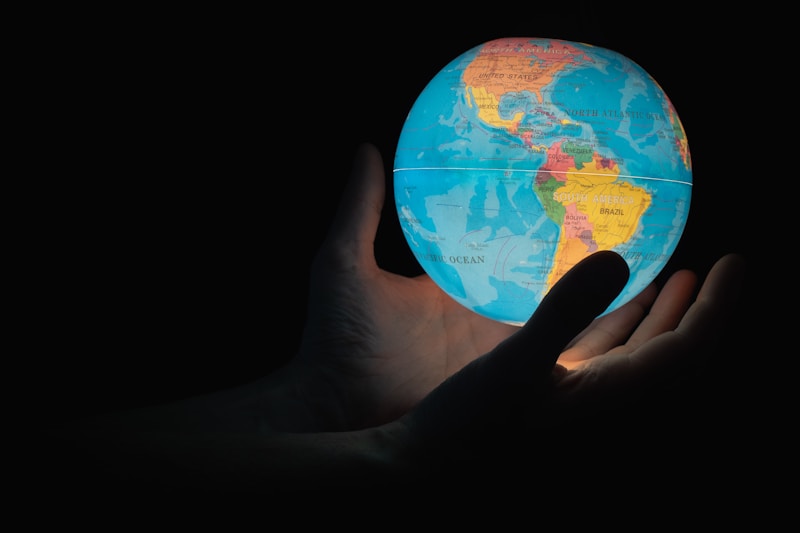
The statistics are staggering. In regions like Africa and South Asia, VOA reaches audiences where independent journalism faces government suppression. Communities in authoritarian states depend on VOA programming to access information their governments would prefer to censor. For these audiences, why is real America’s voice matters profoundly—regardless of funding source.
Consider recent reporting from VOA’s African service on corruption, governance failures, and human rights abuses. These stories have influenced local conversations and occasionally sparked policy changes. Latin American audiences similarly rely on Spanish-language VOA coverage for international news and American cultural context. In 2026, this utility remains undeniable.
Yet competitors have multiplied exponentially. British Broadcasting Corporation, Reuters, Deutsche Welle, and Chinese state media all battle for audience attention. Meanwhile, TikTok, Instagram, and YouTube distribute news through channels that circumvent traditional broadcasting infrastructure. Why is real America’s voice still dominant? Increasingly, it isn’t—particularly among Gen Z audiences who question institutional media broadly. This is especially relevant for those interested in why is real americas voice.
The Authenticity Question: Does VOA Reflect True American Values?
This question provokes passionate debate among journalists, policymakers, and audiences. According to a Reuters analysis of global media perception in 2025, American-funded broadcasters scored relatively high on trustworthiness metrics compared to explicitly state-controlled Chinese and Russian outlets—but ranked below BBC and other clearly independent operations.
Why is real America’s voice perceived differently in different regions? Context matters enormously. In Vietnam, where VOA Vietnamese was banned until 2006, the broadcaster symbolizes democratic resistance. In Pakistan, audiences appreciate VOA’s coverage of Afghanistan and regional geopolitics. In Cuba and Venezuela, VOA represents information alternatives to government monopolies. But in European democracies where local journalism thrives, why is real America’s voice less essential? This is especially relevant for those interested in why is real americas voice.
The authenticity question ultimately hinges on execution rather than funding. Does VOA employ rigorous fact-checking, transparent corrections, and balanced sourcing? Do journalists have freedom to criticize American policies when warranted? The answer appears to be: mostly yes, but with persistent gray areas.
Challenges and Controversies Shaping the Future
Recent years have tested VOA’s independence repeatedly. Leadership disputes over editorial direction, legal challenges to personnel decisions, and allegations regarding political hiring have created organizational turbulence. Some controversies involved News coverage of sensitive topics; others centered on workplace culture and diversity initiatives. This is especially relevant for those interested in why is real americas voice.
Additionally, why is real America’s voice diminished by social media misinformation that spreads faster than fact-based reporting? Algorithmic feeds prioritize engagement over accuracy, meaning sensational falsehoods often outcompete careful VOA journalism in viral metrics. This structural disadvantage affects all traditional news organizations, but especially those serving international audiences unfamiliar with American media ecosystems.
Technological challenges compound these issues. Streaming quality, app functionality, and language availability vary wildly across regions. Technical infrastructure supporting VOA services in conflict zones or underdeveloped regions remains inconsistent. Meanwhile, some countries deliberately block VOA signals—Iran, North Korea, and China all employ sophisticated jamming techniques. This is especially relevant for those interested in why is real americas voice.
What Comes Next for America’s Global Messaging?
Looking ahead to 2027 and beyond, VOA faces critical decisions. Will it embrace multimedia storytelling more aggressively, competing on TikTok and emerging platforms? Should it prioritize traditional radio in regions where internet access remains limited? How can it maintain editorial independence while serving American strategic interests transparently?
Some analysts propose structural reforms: increased editorial board independence, clearer firewalls between government officials and newsroom decisions, and enhanced transparency about funding and ownership. Others argue the model itself is flawed—that no state broadcaster can authentically claim independence regardless of structural protections. This is especially relevant for those interested in why is real americas voice.
The most provocative question lingers: Why is real America’s voice still necessary if American values allegedly emphasize free press and independent journalism? Shouldn’t a truly democratic nation support independent international outlets rather than funding its own propaganda apparatus?
This question doesn’t have an easy answer. VOA fills genuine information gaps where independent journalism cannot flourish. Its journalists risk safety to report stories other outlets ignore. Yet its government affiliation creates inherent limitations on editorial freedom. Perhaps the real issue isn’t whether why real America’s voice should exist, but rather how it can maximize authenticity and independence within structural constraints. This is especially relevant for those interested in why is real americas voice.
The conversation should shift from whether VOA is perfect to whether it’s necessary, useful, and improving. By those metrics, despite imperfections and controversies, America’s voice continues broadcasting messages of democratic values, factual reporting, and alternative perspectives to audiences desperately seeking them worldwide.
What do you believe matters most: a broadcaster’s funding source or its actual editorial performance? Share your thoughts below. This is especially relevant for those interested in why is real americas voice.
Photo by Phil Hearing on Unsplash