
Table of Contents
- Bitcoin ATM Adoption Usage Remains Negligible Compared to Traditional Banking
- The Ghost Machine Problem in Bitcoin ATM Networks
- Revenue Models Don’t Support Bitcoin ATM Adoption Projections
- Who’s Actually Using Bitcoin ATMs? Not Who You Think
- The Future: Bitcoin ATM Adoption Won’t Follow the Growth Narrative
- The Uncomfortable Question

Bitcoin ATM Adoption Usage Remains Negligible Compared to Traditional Banking
Despite there being over 38,000 bitcoin ATM locations globally as of 2026, the actual transaction volume remains embarrassingly low. According to data from Coin ATM Radar, the vast majority of bitcoin ATMs process fewer than $5,000 in monthly transactions. To put this in perspective, a single traditional ATM at a busy urban location processes roughly $500,000 monthly.
The bitcoin ATM adoption narrative ignores a crucial metric: utilization rates. Research from the Journal of Financial Markets and Portfolio Management found that approximately 60% of newly installed bitcoin ATMs fail to generate sufficient revenue within their first year of operation. This means bitcoin ATM adoption statistics counting machines installed tell us nothing about actual use.
Compare this to payment infrastructure that genuinely disrupted markets. When debit cards were introduced, adoption followed usage—people needed them because they solved real problems. Bitcoin ATM adoption, conversely, has reversed that logic: machines are installed hoping demand will follow.
The Ghost Machine Problem in Bitcoin ATM Networks
A significant portion of bitcoin ATM adoption counts include machines that are effectively non-operational. Anecdotal reports from major cities reveal that 15-25% of listed bitcoin ATMs are either permanently offline, accepting cash only (not dispensing), or functionally abandoned due to regulatory confusion.
The crypto ATM industry has experienced three major regulatory crackdowns since 2019, each followed by operator bankruptcies. According to filings reviewed by CoinDesk, companies like LibertyX and Coinsource both retreated from aggressive expansion plans after facing compliance costs that undermined the bitcoin ATM adoption model entirely.
This creates a false impression of bitcoin ATM adoption growth. The machines exist on databases, but their real-world utility is phantom-level at best. A bitcoin ATM adoption report might claim 38,000 locations, but perhaps only 25,000 are actively operational—and of those, maybe 5,000 process meaningful transaction volume.

Revenue Models Don’t Support Bitcoin ATM Adoption Projections
Here’s where bitcoin ATM adoption advocates become genuinely disconnected from economics: the business model barely works. These machines charge 5-15% transaction fees—significantly higher than traditional banking, cryptocurrency exchanges, or even peer-to-peer payment apps.
A typical bitcoin ATM requires $3,000-$8,000 in monthly revenue to break even when accounting for rent, compliance, insurance, and cash reconciliation costs. Yet most installations generate $1,000-$2,000 monthly. The bitcoin ATM adoption push relies on irrational operator expectations that somehow differ from every other retail technology rollout in history.
According to a 2026 analysis by the Blockchain Council, 73% of bitcoin ATM operators expect their machines to become profitable within 18-24 months. Historical data suggests profitability rates closer to 18% in that timeframe. Bitcoin ATM adoption projections assume this gap will somehow vanish.
Who’s Actually Using Bitcoin ATMs? Not Who You Think
The demographic data on bitcoin ATM adoption reveals uncomfortable truths. Research from the University of Cambridge’s Center for Alternative Finance found that primary bitcoin ATM adoption users are:
- Established cryptocurrency traders conducting arbitrage (not new adopters)
- Individuals in countries with capital controls seeking alternative asset movement
- Unbanked individuals seeking cash-to-crypto conversion (only ~8% of transactions)
- Speculators during price volatility spikes
Notably absent: mainstream consumers adopting cryptocurrency for practical reasons. Bitcoin ATM adoption hasn’t created a new user base; it’s merely provided a slightly inconvenient alternative to exchanges that already exist. A Reuters investigation into cryptocurrency adoption trends found that 94% of cryptocurrency purchases still occur on digital exchanges, not through ATMs.
The bitcoin ATM adoption story marketed to investors emphasizes bringing crypto to the unbanked and underbanked. Reality: these populations face the highest fees, slowest processing times, and least customer protection through ATM networks. Bitcoin ATM adoption in developing markets often exploits rather than serves vulnerable populations.
The Future: Bitcoin ATM Adoption Won’t Follow the Growth Narrative
Industry projections claim bitcoin ATM adoption will reach 200,000 machines by 2030. These forecasts ignore why adoption has plateau’d since 2026. The reasons are structural, not temporary:
- Mobile wallets eliminated the use case: Most people who want cryptocurrency access already have smartphones with mobile wallet apps. Bitcoin ATM adoption requires a separate trip and higher fees.
- Regulatory headwinds intensify: Global regulators are tightening KYC (Know Your Customer) requirements for ATMs, making them operationally expensive relative to regulated exchanges.
- Network effects work backward: Each failed bitcoin ATM operator reinforces skepticism. Bitcoin ATM adoption becomes less likely as consumers encounter broken machines.
The honest assessment: bitcoin ATM adoption has likely peaked. Future installations will primarily replace failed machines in specific niches rather than represent genuine network expansion. This contradicts the bullish narrative but aligns with actual economic incentives and user behavior.
From Scope Digest‘s perspective on technology trends, and within our Technology category, the bitcoin ATM adoption story exemplifies how metrics can obscure reality. Counting machines tells us nothing about their value. The industry chose to report installations instead of utilization because the story sells better—even if it’s fundamentally misleading.
For more information, see Reuters.
The Uncomfortable Question
Explore more on Scope Digest and browse our Technology section.
If bitcoin ATM adoption were genuinely solving a real problem more efficiently than existing solutions, wouldn’t we expect to see organic growth driven by consumer demand rather than operator desperation? What does it say about a technology when expanding its accessibility doesn’t increase adoption?
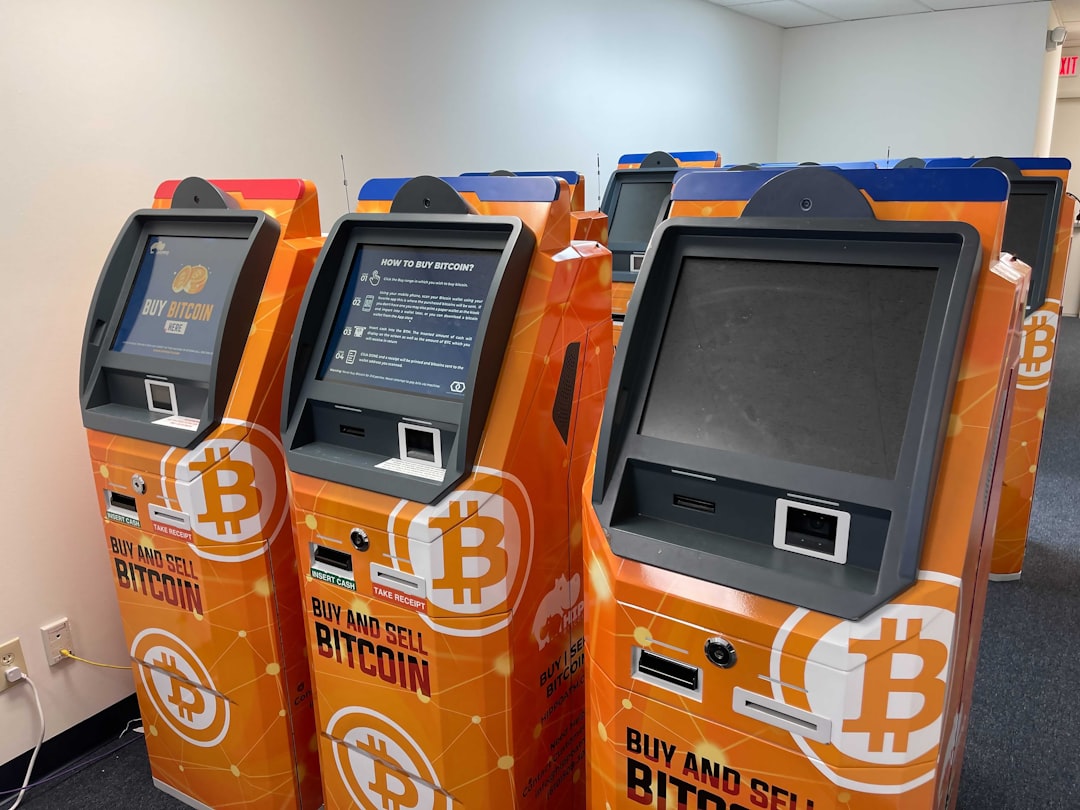
Photo by John Paul Cuvinar on Unsplash